Future-Proof Senior Care: How to Choose an Assisted Living Home That Adapts to Altering Needs
Business Name: BeeHive Homes of Goshen
Address: 12336 W Hwy 42, Goshen, KY 40026
Phone: (502) 694-3888
BeeHive Homes of Goshen
We are an Assisted Living Home with loving caregivers 24/7. Located in beautiful Oldham County, just 5 miles from the Gene Snyder. Our home is safe and small. Locally owned and operated. One monthly price includes 3 meals, snacks, medication reminders, assistance with dressing, showering, toileting, housekeeping, laundry, emergency call system, cable TV, individual and group activities. No level of care increases. See our Facebook Page.
12336 W Hwy 42, Goshen, KY 40026
Business Hours
Families seldom start taking a look at assisted living communities due to the fact that everything is calm and predictable. Generally there has been a fall, a medical facility stay, a wandering incident, or a sluggish build-up of small worries that no longer feel small. The immediate impulse is to solve the problem in front of you: "We require a safe place where Mom can get help with showers and medications."
That instinct is understandable, however it is also where lots of people make their greatest mistake. They look for what their parent needs this month, not what they are most likely to need three, five, or eight years from now. The outcome is preventable disruption, unforeseen expenses, and painful moves at the very point when stability matters most.
Future-proof senior care begins with asking a various question: not simply "Is this a great assisted living home for today?" however "Will this community still fit if things get more made complex?"
Drawing on what I have seen in senior care over several years, consisting of both excellent and deeply problematic placements, here is how to examine an assisted living home with an eye on the long arc of aging, not just the present moment.
Understanding how requirements typically change over time
Every person ages in their own method, yet particular patterns appear so typically that disregarding them is dangerous. When families just look at existing needs, they undervalue how quickly the care picture can change.
Most residents who move into assisted living need aid with a handful of things: possibly medication reminders, meal preparation, house cleaning, or some assistance with bathing and dressing. They are generally still social, still able to promote themselves, and often still driving or at least directing their own days.
Over the years, several factors tend to move:
- Mobility slowly declines. Somebody who walks separately today might require a walker in a couple of years, and a wheelchair after that. Stairs become a barrier, long hallways end up being stressful, and fall threat rises.
- Medical intricacy increases. A resident might begin with well-controlled diabetes and high blood pressure, then develop cardiac arrest or COPD, or require anticoagulation, or go through a stroke or a joint replacement, each including tracking and care tasks.
- Cognitive changes creep in. Moderate lapse of memory can advance to substantial amnesia, confusion, or dementia. Behaviors like wandering, agitation, or nighttime wakefulness may appear.
- Continence and personal care needs modification. Toileting assistance, incontinence care, and more hands-on help with bathing, grooming, and dressing typically increase.
- Emotional and social requirements evolve. Friends at the neighborhood pass away or move away. A partner passes. A once-outgoing resident might end up being withdrawn or depressed.
When you tour an assisted living neighborhood, you are fulfilling it throughout the honeymoon phase: your parent is new, personnel are attempting to impress, and requirements are fairly modest. A much better test is this: "If my parent is two times as frail as they are now, would this place still work?"
That frame of mind moves what you pay attention to.
Levels of care: what can stay, what need to move
The terms "assisted living," "memory care," and "competent nursing" sound clear, however they are not standardized in practice. Each state certifies these differently, and each operator specifies its own limits.
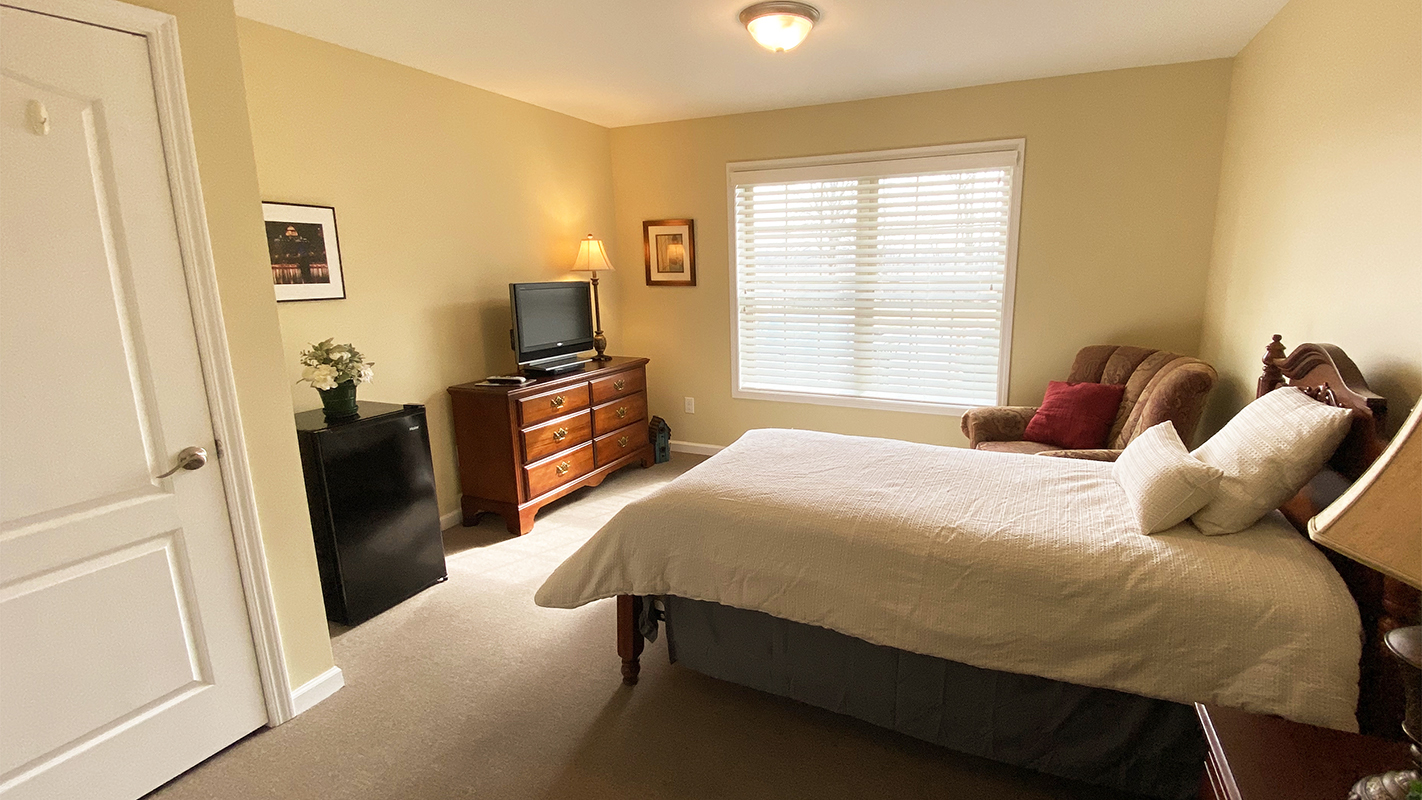
For future-proof planning, you wish to understand 2 things very exactly: how far the neighborhood can increase assistance, and where their tough stop lies.
In lots of regions, you will encounter 3 broad tiers:
- Assisted living for locals who need aid with activities of daily living, but do not need 24/7 nursing.
- Memory care, either as a different locked unit within the same community or as a different building, for residents with dementia who need more guidance and a structured environment.
- Skilled nursing (nursing homes) for residents with complex medical needs that require continuous nursing assessment, regular treatments, or rehabilitation services.
The obstacle is that "assisted living" can suggest very different things. Some structures can deal with sliding-scale insulin, catheter care, two-person transfers, or hospice coordination. Others can not. Some memory care units are successfully assisted living with a door lock, barely geared up to deal with major behavioral requirements. Others are genuinely specialized, with experienced staff, individualized programs, and strong medical partners.
Ask particularly:
- What kinds of care can not be offered here, even with outside assistance?
- At what point would my parent be needed to move to a greater level of care?
- Are there residents here who are on hospice? Who use wheelchairs full time? Who need two personnel to help transfer?
- If my parent ultimately requires memory care, do you provide it within this community, or would they move to a different structure or provider?
A future-proof choice is not always the one that can do whatever, but the one that is clear and sincere about its boundaries, and that has a practical, thoughtful prepare for residents whose needs grow.
The anatomy of a versatile care plan
A static care plan is a warning. Aging is vibrant, so senior care needs to be too. When a community deals with the care strategy as paperwork done at move-in and revisited just during crisis, locals either get insufficient support or spend for services they do not use.
Look for a care preparation process that has several traits.
First, it ought to be multidisciplinary. The nurse, caretakers, activities personnel, and ideally a family member ought to have input. I have sat in a lot of conferences where the care plan reflected just what the intake nurse saw on a single afternoon, never the family's truths or the frontline senior living staff's observations.
Second, it must be arranged for regular evaluation, not simply "as required." Every 6 months is good, every three months is much better, and any hospitalization or significant health change should activate an interim review. Ask how often care plans alter for present locals, and what usually prompts an adjustment.
Third, the care strategy need to be detailed enough to inform a new caregiver what "aid with bathing" truly suggests. Does your parent requirement cueing, or hands-on assistance? Are there security concerns or choices, such as water temperature level, usage of grab bars, or modesty issues? The more accurate the documents, the more regularly your parent will get care as personnel turnover happens, which it inevitably will.
Finally, the neighborhood needs to be able to scale services without drama. If your parent begins needing assistance at night instead of just during the day, or shifts from partial to full support with dressing, you desire those changes to be workable modifications, not factors to recommend moving out.
Staffing: the quiet predictor of future quality
Floor strategies and chandeliers do not change the standard math of care. People do. Whenever I ask families what mattered most to them in retrospect, staffing quality and stability constantly sit at the top of the list.
You can hear a lot about future adaptability by asking direct, in some cases unpleasant concerns about staff:
- What is the caregiver-to-resident ratio on days, evenings, and nights?
- How typically are nurses physically in the building? Are they on-site 24/7 or on call after certain hours?
- What is your annual staff turnover rate? What about for the executive director, nurse leader, and frontline caretakers?
- How lots of firm or temperature workers do you rely on in a typical month?
- How do you guarantee constant training in dementia care, fall avoidance, and infection control?
A neighborhood with steady leadership and low turnover typically adapts much better to residents' altering needs. Personnel understand the residents, notice subtle decreases, and can change regimens before emergencies take place.
Conversely, a building that looks full of energy throughout your tour, however quietly counts on rotating temp staff and consistent hiring, might have a hard time when your parent's requirements become more intricate. The care plan on paper will sound outstanding, but the real, day-to-day care will be inconsistent.
Watch, too, how caregivers connect with existing citizens as you walk. Do they speak respectfully? Usage names? React rapidly to call lights? A staff that deals with current locals well is most likely to promote when your parent requires additional attention or a new method to care.
Medical support and collaborations: who is actually enjoying the health curve
Assisted living is not a health center or a complete medical center, but it sits at the crossway of housing and health care. The way a neighborhood manages that crossway has enormous implications for long-lasting stability.
The key concern is not whether there is a medical professional in the structure every day. It seldom occurs. The more appropriate questions concern how medical oversight is organized and how responsive it is.
Ask whether there is an associated primary care practice that sees residents on-site. Numerous progressive neighborhoods partner with geriatricians or nurse professional groups who perform routine rounds in the building. This helps capture issues early: weight loss, medication adverse effects, subtle cognitive changes.
Equally important is the community's relationship with home health, hospice, therapy service providers, and healthcare facilities. A future-proof assisted living home ought to currently have strong paths for:
- Home health nursing visits after a hospitalization
- Physical, occupational, or speech treatment provided on-site
- Smooth transitions to and from respite care or rehab stays
- Hospice services incorporated into the resident's apartment
When these relationships work, a resident can frequently stay in familiar environments through severe health problem, rather than being bounced consistently in between health center, rehabilitation, and long-lasting care. That stability matters as much for households as for the elder.
The function of respite care in testing fit and flexibility
Respite care is often treated as a side service, something households might utilize for a week or more during a caretaker trip or after surgery. Utilized thoughtfully, it becomes a low-risk way to test a community's capability to adapt to real-world needs.
A short-term respite stay lets you see how personnel manage medication changes, sleep disturbances, mobility issues, or behavioral peculiarities in practice, not just promise. It exposes whether the "we can absolutely handle that" you heard during the tour equates into real competence.
When you set up respite care, focus on process more than polish. Notification how the neighborhood collects information about your parent: do they ask detailed questions, or simply fundamental demographics and medical diagnoses? Do they take interest in your parent's habits, routines, and worries?
During and after the stay, observe how communication flows. Did they inform you quickly to any issues or modifications? Were they open to your feedback? If you heard "we do not normally do it that way" more than when, that is a sign that versatility might be limited.
If a community manages respite care with thoughtfulness, excellent documentation, and very little drama, it is a favorable indication that they can react to modifications when your parent lives there full-time.
Environment and style that age gracefully
Architects love to show off grand lobbies, high ceilings, and fancy features. Those functions may capture a buyer's eye in a hotel, however in elderly care they are less important than useful design that still works when someone is 10 years older and significantly more fragile.
When you walk through, picture your parent slower, less constant, perhaps utilizing a walker or wheelchair, maybe more easily confused.
Watch for things like:
- The distance from apartment or condos to dining-room, activity areas, and outside areas. Long corridors that feel great at 78 ended up being daunting at 88.
- The number of modifications in flooring, thresholds, or small steps that can capture a foot or walker wheel.
- Handrail positioning, lighting levels, and contrast in between flooring and wall colors, which help people with visual or cognitive decline browse securely.
- Built-in functions such as walk-in showers with seating, grab bars, and enough space for 2 people if one day your parent requires hands-on assistance.
- Quiet spaces that are not their house, where someone with dementia can sit without being overstimulated by sound or crowds.
Also take a look at memory hints. Exist clear room numbers and personalized hints on doors? Are hallways distinguishable, or does every corner look identical? Locals with cognitive loss often do far much better in environments with visual anchors: colored doors, special artwork, small household-style layouts.
A structure does not require to look like a health center to be safe. The sweet area is a home-like environment that is discreetly, attentively crafted for a wide variety of physical and cognitive abilities.
Activities and social structure that can flex with ability
When people tour an assisted living home, they often look at the activity calendar to ensure there is "sufficient to do." That informs only a fraction of the story. The real question is whether the social life of the neighborhood adjusts as locals slow down, lose hearing, or develop dementia.
A future-proof program has layers: group activities for active citizens, smaller and quieter choices, and one-on-one engagement for those who can no longer sign up with groups. It also recognizes that interests alter. Somebody who loved bingo at 75 may be tired by it at 85 yet still react warmly to music, mild conversation, or time in a garden.
Ask how the group approaches citizens who seldom leave their spaces. Do they make personalized efforts, or simply mark them "not interested"?
Look at who is in fact participating, not just what is offered. Are the most frail residents noticeable in the common areas at all, with some level of support, or do they appear unnoticeable? Communities that buy bringing engagement to homeowners, instead of expecting locals always to come to them, adapt better to increasing frailty.
This is not practically lifestyle. Social isolation can speed up cognitive and physical decrease. A well-run activity program is a kind of preventive care.
Money, models, and preventing monetary traps
Future-proofing senior care is not just medical. It is financial. Households are frequently amazed by how billing structures work as soon as requires increase.
Assisted living pricing typically follows one of three models:
- All-inclusive, where a flat monthly rate covers room, board, and a broad package of services.
- Tiered, where citizens pay a base rate plus service charges for specified "levels" of care.
- A la carte, where each specific service, from medication management to escorts to meals, carries a different fee.
None of these is inherently great or bad. The essential thing is to understand how expenses will move as care intensifies.
Ask for concrete examples, not just sales brochures. What did a resident pay when they moved in with light assistance, and what do they pay 3 years later with moderate requirements? How does the neighborhood manage situations where somebody outlives their funds? If they accept Medicaid, what is the procedure and exist limited Medicaid-designated apartments?
I have seen households who chose a low base rate neighborhood, just to be stunned later on by an ever-growing list of small line products: support to the dining room, assist with hearing aids, extra laundry. The reverse likewise happens: a greater all-encompassing rate that initially seems pricey ends up being stable and foreseeable over several years, specifically for those with rapidly increasing needs.
Future-proof options consider not only "Can we manage this this year?" however "What occurs if we need twice as much care and we are still here?"
Family participation and interaction as needs change
Even in the very best assisted living communities, what families do or do not request for makes a difference. A culture that welcomes, rather than tolerates, household involvement is among the clearest signs that a home will manage modification well.
During your assessment, take note of whether staff seem defensive when you ask comprehensive questions. A strong neighborhood will respond with specifics, not vague peace of minds. They invite household into care conferences, not simply when there is an issue however as a regular part of planning.
Notice how they interact about events and changes. Do they tell you quickly if your loved one has a fall, even without injury? Do they keep you updated on weight changes, sleep disruptions, or brand-new habits that recommend pain or infection?
The goal is a partnership. Families know the elder's history, character, and choices. Staff see the day-to-day patterns and small shifts. Future-proof senior care takes place when those 2 sources of understanding are woven together, not when either side operates in isolation.
A focused list for future-proof evaluation
Use this short list during trips and conversations, not as a scorecard, but as prompts for deeper discussion.
- Does the community clearly describe what care they can not supply and when a resident must move?
- How typically are care plans reviewed, and who takes part in that procedure?
- What is the staff turnover rate, and how stable has leadership remained in the last three to five years?
- How does the neighborhood deal with hospitalizations, rehab stays, and the integration of home health, treatment, or hospice?
- Can they offer particular examples of locals who have actually "aged in place" there for several years through increasing needs?
The way personnel address these concerns will reveal more about their capacity to adapt than any glossy brochure.

When moving twice is better than selecting poorly once
Families often feel massive pressure to find "the permanently place" on the first try. That pressure can lead to stalemates or to enduring bad fit since "moving again later on would be awful."
There is truth in that concern. Moves are disruptive, and older grownups can decrease after each transition. Yet holding on to a bad match just due to the fact that it may be "the last move" frequently backfires. A neighborhood that looks future-proof on paper however is weak in culture, communication, or daily care will not suddenly enhance as your parent's needs deepen.
Sometimes the best course is staged: a smaller assisted living community for a few years, then a transfer into a campus with incorporated memory care, or from a private-pay setting to one that takes part in Medicaid once long-lasting finances are clearer. The secret is to select each step deliberately, with an eye on the most likely next one, instead of seeing every decision as irreversible.
A rare however important edge case includes couples with extremely various needs. One partner might need memory care, while the other still drives, cooks, and interacts socially. In these scenarios, future-proofing often indicates prioritizing campus-style settings where both assisted living and memory care are available in close distance, even if it means some compromise on other choices. Keeping spouses connected, rather than throughout town in different facilities, matters exceptionally over time.
Bringing it all together
Choosing an assisted living home is not just about granite counter tops, restaurant-style dining, or a hectic activity calendar. It is a choice about how your parent will weather the storms that have not yet arrived: a damaged hip, an unexpected confusion episode, a progressive dementia, a sluggish slide in strength and stamina.
Future-proof senior care rests on a handful of core realities. Needs will alter. Crises will happen. Finances will develop. What you are actually selecting is a partner because uncertainty.
When you find a community that is honest about its limitations, disciplined in its care preparation, thoughtful in its style, steady in its staffing, well linked to medical partners, and open to household collaboration, you are not simply fixing today's issue. You are developing a structure around your parent's life that can flex, change, and respond as the years unfold.
That is what it means to pick an assisted living home that really adapts to altering needs, and it is among the most concrete presents you can offer to both your loved one and to yourself.
BeeHive Homes of Goshen provides assisted living care
BeeHive Homes of Goshen provides memory care services
BeeHive Homes of Goshen provides respite care services
BeeHive Homes of Goshen supports assistance with bathing and grooming
BeeHive Homes of Goshen offers private bedrooms with private bathrooms
BeeHive Homes of Goshen provides medication monitoring and documentation
BeeHive Homes of Goshen serves dietitian-approved meals
BeeHive Homes of Goshen provides housekeeping services
BeeHive Homes of Goshen provides laundry services
BeeHive Homes of Goshen offers community dining and social engagement activities
BeeHive Homes of Goshen features life enrichment activities
BeeHive Homes of Goshen supports personal care assistance during meals and daily routines
BeeHive Homes of Goshen promotes frequent physical and mental exercise opportunities
BeeHive Homes of Goshen provides a home-like residential environment
BeeHive Homes of Goshen creates customized care plans as residents’ needs change
BeeHive Homes of Goshen assesses individual resident care needs
BeeHive Homes of Goshen accepts private pay and long-term care insurance
BeeHive Homes of Goshen assists qualified veterans with Aid and Attendance benefits
BeeHive Homes of Goshen encourages meaningful resident-to-staff relationships
BeeHive Homes of Goshen delivers compassionate, attentive senior care focused on dignity and comfort
BeeHive Homes of Goshen has a phone number of (502) 694-3888
BeeHive Homes of Goshen has an address of 12336 W Hwy 42, Goshen, KY 40026
BeeHive Homes of Goshen has a website https://beehivehomes.com/locations/goshen/
BeeHive Homes of Goshen has Google Maps listing https://maps.app.goo.gl/UqAUbipJaRAW2W767
BeeHive Homes of Goshen has Facebook page https://www.facebook.com/beehivehomesofgoshen
BeeHive Homes of Goshen won Top Assisted Living Homes 2025
BeeHive Homes of Goshen earned Best Customer Service Award 2024
BeeHive Homes of Goshen placed 1st for Senior Living Communities 2025
People Also Ask about BeeHive Homes of Goshen
What does assisted living cost at BeeHive Homes of Goshen, KY?
Monthly rates at BeeHive Homes of Goshen are based on the size of the private room selected and the level of care needed. Each resident receives a personalized assessment to ensure pricing accurately reflects their care needs. Families appreciate our clear, transparent approach to assisted living costs, with no hidden fees or surprise charges
Can residents live at BeeHive Homes for the rest of their lives?
In many cases, yes. BeeHive Homes of Goshen is designed to support residents as their needs change over time. As long as care needs can be safely met without requiring 24-hour skilled nursing, residents may remain in our home. Our goal is to provide continuity, comfort, and peace of mind whenever possible
How does medical care work for assisted living and respite care residents?
Residents at BeeHive Homes of Goshen may continue seeing their existing physicians and medical providers. We also work closely with trusted medical organizations in the Louisville area that can provide services directly in the home when needed. This flexibility allows residents to receive care without unnecessary disruption
What are the visiting hours at BeeHive Homes of Goshen?
Visiting hours are flexible and designed to accommodate both residents and their families. We encourage regular visits and family involvement, while also respecting residents’ daily routines and rest times. Visits are welcome—just not too early in the morning or too late in the evening
Are couples able to live together at BeeHive Homes of Goshen?
Yes. BeeHive Homes of Goshen offers select private rooms that can accommodate couples, depending on availability and care needs. Couples appreciate the opportunity to remain together while receiving the support they need. Please contact us to discuss current availability and options
Where is BeeHive Homes of Goshen located?
BeeHive Homes of Goshen is conveniently located at 12336 W Hwy 42, Goshen, KY 40026. You can easily find directions on Google Maps or call at (502) 694-3888 Monday through Sunday 7:00am to 7:00pm
How can I contact BeeHive Homes of Goshen?
You can contact BeeHive Homes of Goshen by phone at: (502) 694-3888, visit their website at https://beehivehomes.com/locations/goshen/, or connect on social media via Facebook
Kentucky Derby Museum offers engaging exhibits that can be enjoyed by residents in assisted living or memory care during senior care and respite care outings.